

 Image 1 of 1
Can a frightening or overwhelming medical experience ever become a place of growth?
It is a tender question, and not one with a tidy answer. Post-traumatic growth does not mean that what happened to you was good, and it never asks you to be grateful for your hardest moments. It simply names something many people quietly notice over time. Alongside the fear, grief, and exhaustion of medical trauma, there can also be unexpected shifts. A deeper appreciation for the body. Closer relationships. A clearer sense of what matters. Stepping into advocacy to make things better for those that come after you. A different, quieter kind of strength.
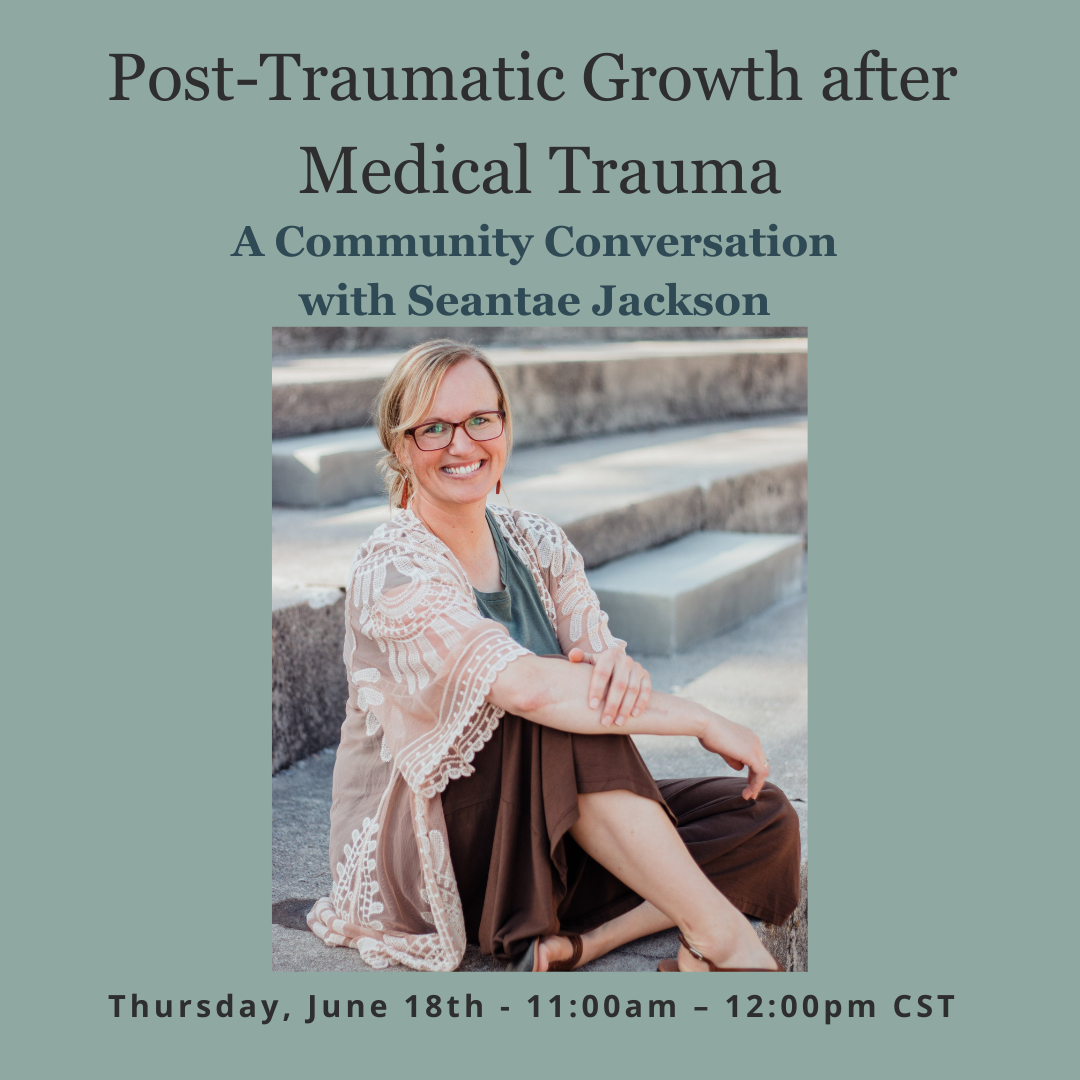
In this recorded community conversation, I sit down with Seantae Jackson for an honest, human-centered conversation about post-traumatic growth after medical trauma. Together we explore what growth actually looks like in real life, why it is so rarely linear, and how the nervous system shapes the way we carry, and eventually move through, difficult medical experiences.
This is not a conversation about forcing positivity or rushing past pain. It is about making room for both: the weight of what you have been through, and the possibility that you are still becoming.
What post-traumatic growth really means, and what it does not mean
How medical care can impact the body, trust, and sense of safety
Why growth so often lives alongside grief, rather than replacing it
Gentle, nervous-system-informed ways to support your own healing after medical trauma
Small steps toward feeling safer in your body again
A recorded video conversation you can watch anytime, at your own pace, returning to it as often as you need. There is no schedule to keep and no pressure to get it "right." Just a warm, reflective conversation you can sit with whenever the timing feels right for you.
This conversation is offered for educational and informational purposes only. It is not therapy, counseling, or medical advice, and it is not a substitute for care from a licensed professional. Watching this recording does not create a therapeutic or client relationship with me or with my guest. If you are struggling or in crisis, please reach out to a qualified mental health professional, your doctor, or your local emergency services.
Can a frightening or overwhelming medical experience ever become a place of growth?
It is a tender question, and not one with a tidy answer. Post-traumatic growth does not mean that what happened to you was good, and it never asks you to be grateful for your hardest moments. It simply names something many people quietly notice over time. Alongside the fear, grief, and exhaustion of medical trauma, there can also be unexpected shifts. A deeper appreciation for the body. Closer relationships. A clearer sense of what matters. Stepping into advocacy to make things better for those that come after you. A different, quieter kind of strength.
In this recorded community conversation, I sit down with Seantae Jackson for an honest, human-centered conversation about post-traumatic growth after medical trauma. Together we explore what growth actually looks like in real life, why it is so rarely linear, and how the nervous system shapes the way we carry, and eventually move through, difficult medical experiences.
This is not a conversation about forcing positivity or rushing past pain. It is about making room for both: the weight of what you have been through, and the possibility that you are still becoming.
What post-traumatic growth really means, and what it does not mean
How medical care can impact the body, trust, and sense of safety
Why growth so often lives alongside grief, rather than replacing it
Gentle, nervous-system-informed ways to support your own healing after medical trauma
Small steps toward feeling safer in your body again
A recorded video conversation you can watch anytime, at your own pace, returning to it as often as you need. There is no schedule to keep and no pressure to get it "right." Just a warm, reflective conversation you can sit with whenever the timing feels right for you.
This conversation is offered for educational and informational purposes only. It is not therapy, counseling, or medical advice, and it is not a substitute for care from a licensed professional. Watching this recording does not create a therapeutic or client relationship with me or with my guest. If you are struggling or in crisis, please reach out to a qualified mental health professional, your doctor, or your local emergency services.